Necro Survival
- 4.5
- Rating
- 50.00K
- Installs
- Free
- Price

 Analysis by App-foxy
I went into Necro Survival expecting a simple casual survival game, and that is exactly where it works best: as a quick, easy-to-understand game built around turning defeated enemies into extra help. Its central idea is immediately appealing, but the real question is whether that idea stays interesting after the first few sessions. In my experience, it does when I treat each run as a short experiment in survival and growth, rather than expecting a deep strategy game with endless layers.
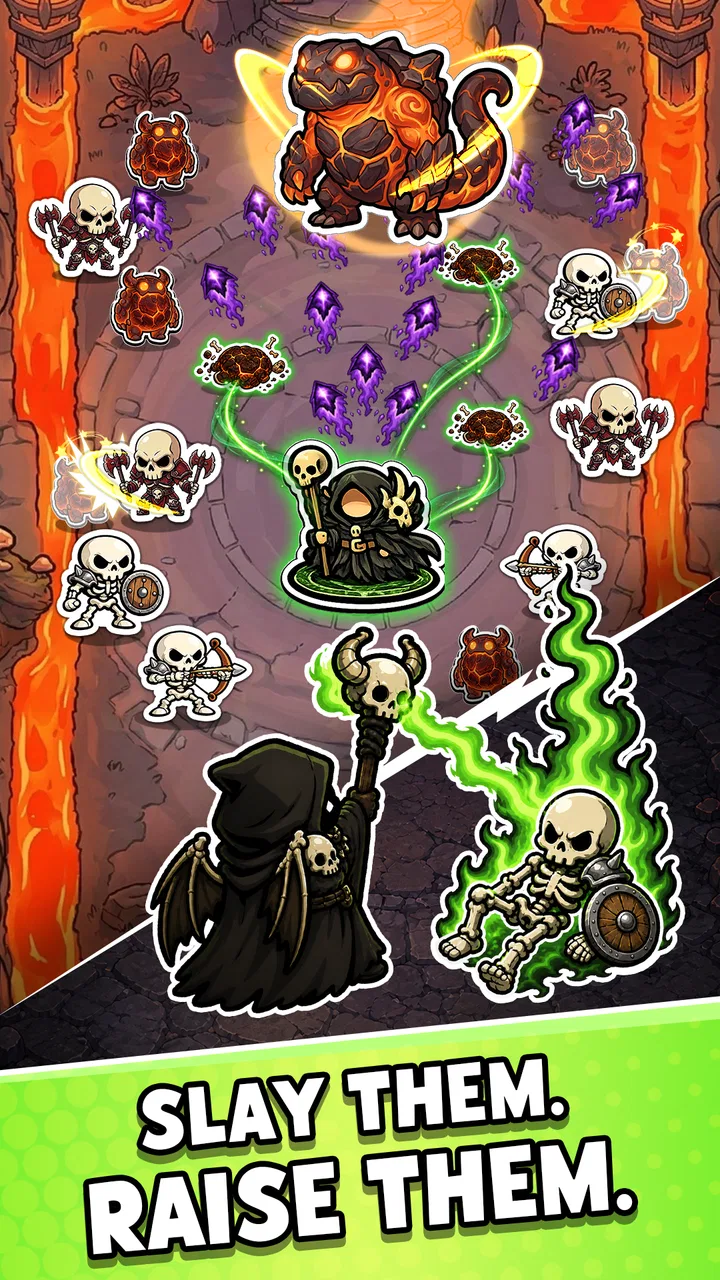
Developed by Sugarscone, this free game puts a light spin on the familiar survival format. You begin vulnerable, face enemies, and gradually build an undead force from the opponents you bring down. That creates a satisfying change in perspective. Instead of only trying to escape danger, I am also looking for ways to make danger useful. The result is a game that feels more active than a standard casual time-killer, while remaining approachable enough for someone who does not usually play complex action games.
The store presents it as “Necro Survival,” and that short label is accurate without telling the whole story. The important hook is not simply surviving for as long as possible. It is surviving while converting the pressure around you into an advantage. The best part is the moment when a difficult encounter changes the balance of a run: enemies that were threatening me become part of the force helping me continue.
You May Also Like

 AccuWeather: Weather Radar
AccuWeather Review: A Quick, Clear Forecast for Everyday Decisions
For everyday plans, the best forecast is the one you can understand quickly. AccuWeather makes rain timing, radar, and local conditions easy to act on, with a few trade-offs.

 Hill Climb Racing
Why Hill Climb Racing Still Turns Crashes Into One More Run
A tiny car, a bumpy hill and one more upgrade: Hill Climb Racing keeps resurfacing because its simple chaos makes every near-miss feel personal.

 AliExpress - Shopping App
AliExpress Makes Global Shopping Feel Personal, but Shoppers Bear the Risk
AliExpress turns a global marketplace into a pocket-sized discovery engine. Its reach is useful, its shopping loop compelling, and its trade-offs easy to miss.

 Lords Mobile: Kingdom Wars
Lords Mobile Is a Kingdom-Building Routine, Not a Quick Match
A case-by-case verdict on the building, battles, device demands, and social commitments that make Lords Mobile rewarding for some players and exhausting for others.

 PDF Scanner app - TapScanner
TapScanner Makes Paperwork Easier to Capture, Check, and Share
TapScanner makes scanning with a phone feel less like a rescue operation and more like a dependable step in getting work done. Its capture tools are useful, though not flawless.

 Block Blast!
 Shows How Much a Puzzle Game Can Leave Out
A quiet grid game shows why puzzle players increasingly value instant clarity, repeatable skill and low-pressure play—and where the genre still needs to catch up.
More From Our News Desk
View All News


How the undead survival loop feels in practice
The first few minutes are easy to understand. I move through danger, focus on staying alive, and pay attention to what each defeated enemy can contribute to my growing army. The game does not need a long explanation to communicate its main appeal. That makes it a comfortable choice when I want to play immediately rather than study a complicated rule set.
What gives the loop more character is the order in which I make decisions. A weak enemy is not always valuable simply because it is easy to defeat. Sometimes the safer choice is to remove an immediate threat, while at other times it is worth taking a risk to create more undead support. This gives ordinary encounters a little more tension than a routine “move and attack” pattern. I am constantly weighing short-term safety against the possibility of becoming stronger later in the run.
That trade-off is especially useful for casual players who like a small amount of planning without wanting a full strategy interface. The game lets me think ahead, but it does not demand that every move be calculated like a board game. I can play instinctively during a busy moment and still understand why a run succeeded or failed afterward.
The progression also supports a natural rhythm. Early survival is about avoiding mistakes and establishing a foothold. Once the undead group begins to grow, the focus shifts toward using that advantage wisely. Later pressure feels different because I am no longer only protecting one character. I am managing the momentum created by the enemies I have already defeated.
That changing relationship with danger is the strongest evidence that the concept has substance. Many casual survival games become repetitive because the player only avoids increasingly large waves. Here, the defeated opposition has a practical role in the next stage of the run. I found myself paying more attention to positioning and timing because every successful encounter could affect what happens next.
Why the central mechanic is more thoughtful than it first appears
The undead army is not just a visual theme placed on top of a familiar survival formula. It changes how I read the battlefield. A crowded area can look dangerous, but it may also contain the resources needed to stabilize a weak run. That creates a useful mental shift: I am not searching only for empty space. I am looking for a route through danger that leaves me stronger on the other side.
One practical approach is to avoid spending every advantage immediately. When the situation is manageable, I prefer to preserve room to maneuver rather than rush into the largest group of enemies. This gives me a better chance to choose which threat to handle first. The game rewards patience more than frantic movement, particularly when a careless encounter could erase the progress built during the earlier part of a run.
A second useful habit is to treat the army as a buffer, not as permission to ignore danger. It is tempting to become overconfident once several undead allies are following me. However, relying on numbers alone can make a run feel safe right before it collapses. I get better results when I continue watching the immediate threats and use the army to create opportunities rather than assuming it will solve every problem automatically.
A third insight is that the strongest moment to take a risk is not always when the screen looks calm. A quiet stretch can be valuable for preparing a route, but it can also tempt me into chasing a reward too far. I prefer risks that improve my position without forcing me into a corner. That approach makes the game feel more deliberate and gives each run a clearer story than simply surviving by luck.
These details may sound modest, but they are what separate a playable idea from a forgettable one. The game does not need a complicated collection of systems to make its theme matter. The act of turning fallen enemies into support already affects how I move, what I prioritize, and when I decide to retreat from danger.
Where the casual format helps, and where it limits the experience
The casual category is a good fit because the game is easy to pick up. I can return after a break and quickly remember the objective. That makes it suitable for short sessions during a commute, while waiting for an appointment, or when I have only enough time for a few attempts. It does not require the same commitment as a large role-playing game, and that accessibility is one of its clearest strengths.
At the same time, players looking for a highly detailed survival simulator may find the format too light. The appeal comes from the undead conversion loop and the pressure of each run, not from an enormous world filled with elaborate narrative or extensive character management. If your ideal game includes a long campaign, deep equipment planning, or a large social component, this is probably not the right place to look.
There is also a natural repetition built into the design. Runs share the same broad purpose: survive, evolve, and use defeated enemies to build power. That loop is enjoyable when I am experimenting with better decisions, but it may lose its shine for anyone who needs constant novelty. I would recommend trying it in short bursts rather than expecting it to replace every other game on a phone.
The free entry point makes that limitation easier to accept. I can test the core experience without paying first, which is important for a casual title whose long-term appeal depends on whether its repeated runs match my personal taste. The game includes in-app purchases ranging from $0.99 to $99.99 per item, so I would approach optional spending carefully and decide whether the basic loop is already satisfying before considering any purchase.
What the current version means for new players
The current version is 1.8.2, and that is useful context for anyone deciding whether to start now. I found the experience easiest to judge by focusing on the basic loop rather than assuming that a version number guarantees a particular style of future development. The important question for a new player is whether the moment-to-moment survival and army-building feel enjoyable, and they are strong enough to support a trial.
Compatibility is also fairly broad. The game supports Android 7.0 and later, which means many older devices can potentially run it. That makes it more approachable than games that require a recent operating system. Still, I would keep expectations sensible on older hardware: a compatible system is not automatically the same as a modern, high-performance device, and the smoothness of any game can depend on the phone itself.
The age rating is Everyone, so the presentation is positioned for a broad audience. The undead theme may sound darker than the rating suggests, but the game’s appeal is centered on playful survival and progression rather than mature storytelling. I would still consider a child’s personal comfort with monsters, but families looking for a straightforward casual game have a much easier starting point here than with horror-focused alternatives.
How it compares with familiar casual alternatives
Compared with a conventional endless runner, this game gives me more reason to think about encounters. An endless runner usually emphasizes reflexes, route choice, and avoiding obstacles. Necro Survival adds a strategic question to that foundation: can this threat become part of my strength? If you enjoy runners but want defeated enemies to matter beyond the score, the undead mechanic gives this game a distinct identity.
Compared with a standard wave-survival game, it feels less passive. In many games in that category, the main satisfaction comes from watching a build grow while enemies approach. Here, I feel more involved in deciding how danger should be used. That does not necessarily make it deeper than every alternative, but it gives my movement and target choices more meaning.
On the other hand, players who prefer puzzle games may find the action too immediate, while fans of large strategy games may find the decision-making too compact. The best comparison is not a full tactical experience but a casual survival game with a clever conversion idea at its center. That distinction matters because it sets the right expectations before downloading.
Situations where it fits naturally into everyday play
My favorite use case is a short break when I want something more engaging than scrolling but do not have the attention for a long campaign. I can start a run, make a few choices, and stop without needing to remember a complicated plot. The game also works well as a palate cleanser between more demanding games because its goal is clear from the beginning.
It is less suitable when I want a calm experience with no pressure. Even though the controls and concept are approachable, survival still creates urgency. A player who prefers decorating, organizing, or slow exploration may not enjoy the constant need to react to threats. Likewise, someone looking for a story-driven undead adventure should not choose this solely because of its theme.
I would also be cautious about recommending it to players who dislike repeated attempts. The game’s structure encourages learning through runs, and improvement often comes from recognizing a bad decision and trying a different approach. If failure feels frustrating rather than informative, the central loop may become tiring quickly.
Who should try it and who should skip it
I would recommend it to casual players who like compact survival challenges, simple controls, and a mechanic that changes the usual relationship between the player and enemies. It is particularly appealing if you enjoy seeing a small advantage grow into a useful force, but you do not want to manage a complicated army roster or a long list of statistics.
It is also a good fit for someone curious about the survival genre but intimidated by more demanding games. The concept is easy to grasp, and the undead army gives newcomers a clear reason to keep experimenting. Rather than asking me to master many systems at once, it encourages me to understand one strong idea and improve how I use it.
I would skip it if your priority is a substantial narrative, competitive multiplayer, or a highly customizable strategy campaign. I would also look elsewhere if you need a game that feels completely different every time you open it. The repeated survival structure is part of its charm, but it is also the main limitation. Players who already know they dislike run-based repetition are unlikely to be converted by the undead theme alone.
My final view after spending time with the game
Necro Survival succeeds because its main idea affects the way I play rather than merely decorating the screen. Turning defeated enemies into an undead army gives ordinary survival decisions a useful second layer. I am not only asking how to stay alive; I am asking which danger can help me survive the next one.
The experience is not designed to satisfy every kind of player. Its casual structure can feel repetitive, and its simplicity will not replace a deep strategy game or a story-heavy adventure. The presence of in-app purchases also means I would stay disciplined and judge the free experience on its own merits before spending anything.
Still, the balance is convincing for the right audience. With a 4.5 average from around 4.5 thousand ratings and over 50 thousand installs, it has found a clear audience for its compact undead-survival concept. Those figures are not a substitute for personal taste, but they fit my impression that the game is easy to approach and distinctive enough to earn repeat sessions.
For me, the final recommendation is straightforward: try it if you want a free casual game where enemies can become part of your solution. Play in short sessions, take risks selectively, and do not confuse a growing army with total safety. If that simple tactical tension sounds enjoyable, Sugarscone has built a focused game worth your time.
FAQs for Necro Survival
01What is Necro Survival?
Necro Survival is a survival-focused action game in which you fight through dangerous encounters, collect useful resources, and try to stay alive while enemies become increasingly difficult. Its appeal comes from combining fast combat with progression and strategic decision-making. Before downloading, players should expect repeated runs, character improvement, and a gameplay loop designed for short sessions as well as longer play periods.
02How does the gameplay work in Necro Survival?
The main gameplay revolves around controlling your character during battles, avoiding enemy attacks, and using available abilities or equipment at the right moment. As you progress, you can generally improve your survival chances through upgrades and better choices. The experience is easy to understand at first, but later encounters require more careful movement, timing, and planning rather than relying only on constant attacks.
03Is Necro Survival free to download and play?
Necro Survival may be available to download without an upfront purchase, but players should check the current store listing for details about advertising, optional purchases, or other monetization features. Free access does not always mean that every item or convenience is included. Reviewing the permissions, in-app purchase information, and platform requirements before installation is recommended, especially on shared or family devices.
04Can Necro Survival be played offline?
Offline availability can depend on the version of Necro Survival installed and on which features you want to use. Core gameplay may work without a continuous connection, while updates, advertisements, cloud saves, leaderboards, or other online services could require internet access. If offline play is important to you, test the game after installation and verify the latest store description before relying on it during travel.
05What devices are compatible with Necro Survival?
Compatibility depends on the operating system, device model, available storage, and the minimum version required by the current release. Before downloading Necro Survival, check its Google Play or App Store page for supported Android or iOS versions and any listed hardware requirements. Keeping enough free storage and updating your device can also help prevent installation problems, crashes, or performance issues during gameplay.
Pros
- Fast-paced runs make it easy to enjoy in short play sessions.
- Many enemy types keep combat varied as difficulty increases.
- Upgrade choices create satisfying power growth during each run.
- Simple controls work well on both phones and tablets.
- Dark visuals and sound effects suit the undead survival theme.
Cons
- Later waves can feel repetitive once familiar enemy patterns return.
- Random upgrades may make some runs feel weaker than others.
- The screen can become crowded during intense enemy swarms.
- Progress may feel grindy when stronger upgrades require repeated runs.
- Small interface elements can be harder to use on compact screens.

Necro Survival
Gallery